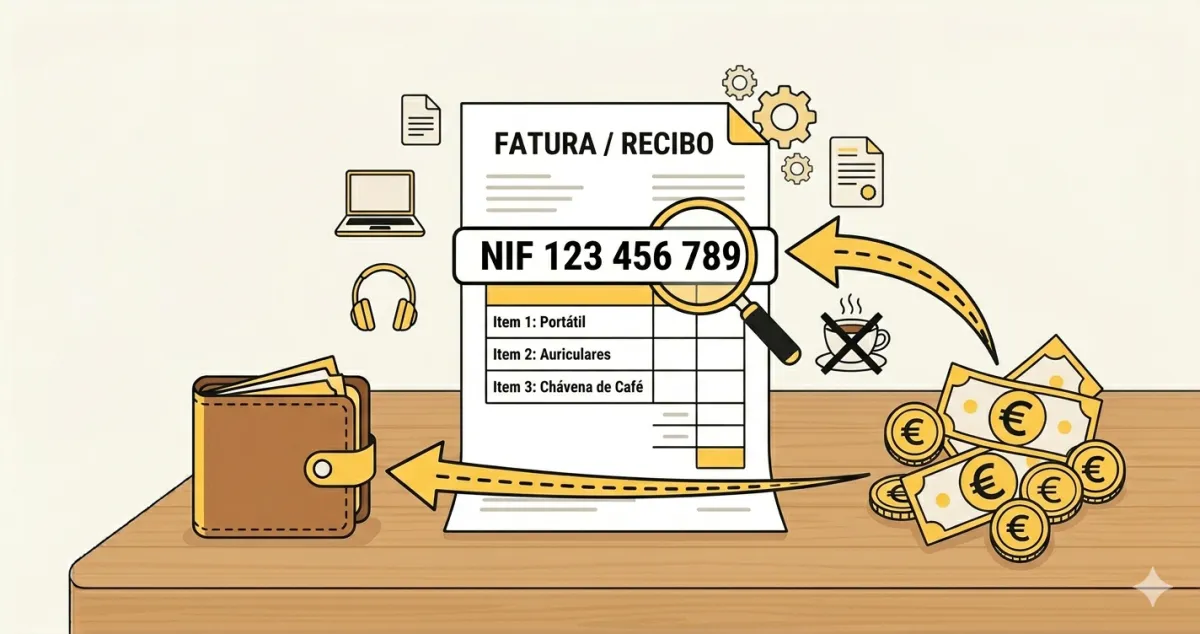

You know that coffee conversation where you say “I want to be a freelancer but first I need to understand everything about taxes”? Right. Six months have passed and you’re still at the same job you hate.
Let’s talk truth: you’re using taxes as an excuse. And you’re not the only one - 90% of aspiring independent workers do the same. “I’ll wait until January,” “first I’ll build up savings,” “I need to understand the whole system before I start.”
Spoiler: you’re wasting time and money. I’ll prove why.
The 4 big excuses (and why they’re nonsense)
1. I’ll wait until January to start fresh
This is a classic. It’s March 2026 and I bet you said this last October. And in October 2024. And probably in 2023 too.
Reality: You can register your activity on any day of the year. Literally any day. The tax system doesn’t care whether it’s January or July.
Practical example: João waited until January to “start fresh.” He lost a 3,000-euro project in November because he didn’t have his activity registered. Maria registered in October and invoiced 4,500 euros by the end of the year. Who do you think made the right decision?
- Waited for the perfect moment
- Lost a €3,000 project in November
- Started with zero invoiced
- Registered activity in October
- Invoiced €4,500 by December
- Started building her track record
2. First I’ll save up 6 months of expenses
The famous financial cushion. Good idea? Yes. Necessary to start? No.
Reality: Most successful freelancers started with zero in the bank. Why? Because the first clients pay for the first months. That’s how it works.
Think about it: if you have a guaranteed client who’s going to pay you 1,500 euros next month, why do you need 10,000 euros in the bank to start?
3. I need to understand the entire tax system first
This is my favorite. It’s like saying you’re going to study the ENTIRE highway code before your first driving lesson.
Reality: 80% of what you need to know about taxes you’ll learn in the first month of activity. The rest? You’ll learn as you need it.
Real example: Sofia spent 3 months reading about VAT, income tax, tax brackets, coefficients… When she finally registered her activity, she discovered she was VAT exempt (she invoices less than 15,000 euros per year). All that VAT study? Useless for the first 2 years.
4. The system is too complicated to do alone
True: the Portuguese tax system isn’t simple. False: you need a PhD to get started.
Reality: With the right tools, it’s easier to be a freelancer today than to work for others. In the past, you needed an accountant from day 1. Today? FIZ submits your quarterly VAT and Social Security declarations automatically. Zero stress.
What you REALLY need to know before registering
Forget the 300-euro courses and 200-page PDFs. This is the essential:
1. How to register your activity
Where: Tax Authority portal (online) or at a Tax Authority office When: Before you issue your first invoice Cost: 0 euros Time: 15 minutes
It’s literally filling out a form. Name, tax number, activity you’ll perform (you choose from a list), VAT regime. Done.
2. Simplified regime vs organized accounting
Simplified: For 99% of beginner freelancers. The State assumes 25% of what you invoice for services is expenses. Simple.
Organized accounting: Only worth it if you have many expenses (more than 25% of your billing). Leave it for later.
- For 99% of beginner freelancers
- 25% assumed expenses
- No accountant required
- Simple and automatic
- Worth it with many expenses
- Deduct actual expenses (>25%)
- Requires an accountant
- More complex
3. VAT - when to charge it
Invoiced less than 15,000 euros in the previous year? You’re exempt. You don’t charge VAT to clients.
Exceeded 15,000 euros? You have to charge VAT (23% on most services).
That’s it. Don’t overcomplicate.
4. How much you’ll actually pay
Under the simplified regime, the State assumes 75% of what you invoice for services is profit. It’s on this amount that you pay income tax.
Simple example: You invoiced 20,000 euros in a year. The State considers 15,000 euros (75%) as your profit. You calculate income tax on these 15,000 euros, not on the 20,000 euros.
The rate? Depends on the total, but starts at 12.50% for lower incomes. With 15,000 euros of profit, the income tax bill comes to around 2,200 euros per year (with progressive rates).
The fatal mistake of perfectionists
The biggest mistake? Thinking you need to have everything perfect before starting.
I know dozens of people who spent MONTHS preparing. Complex invoicing systems, elaborate spreadsheets, online courses… And you know what? Most of them gave up before issuing their first invoice.
Why? Because they turned something simple into a monster. The more you study without practicing, the scarier it seems.
The truth nobody tells you
Did you know you can correct almost everything with the Tax Authority? Chose the wrong activity code? Correct it. Wanted a different regime? Change it. Made a mistake on a quarterly declaration? Replace it.
The system isn’t a prison. It’s flexible. But you only discover this… by starting.
Real story: Pedro registered his activity thinking he’d do design. Two months later, he was giving online training. All it took was an amendment declaration (free) and that was it. Changed his activity code, kept working.
The mental trick that works
Instead of thinking “I need to know everything,” think “I need to know enough for next week.”
- Week 1: Register activity and issue first invoice
- Week 2: Understand when to send the invoice to the client
- Month 1: Understand how Social Security works
- Month 3: Prepare the first quarterly declaration
See? One step at a time. Like a video game - you don’t need to know the final boss when you’re still in the tutorial.
What if I make a mistake?
I’ll be direct: you will make mistakes. We all do. I made mistakes. Your freelancer friends made mistakes.
The difference? Today you have safety nets. FIZ, for example, has the Tax Shield - if there’s an error in a declaration they submit, they cover the fine up to 500 euros.
In other words: your biggest fear (getting a fine) has a solution. So what are you waiting for?
The 10-second test
Answer quickly:
- Do you have a skill someone would pay for? (Yes/No)
- Do you know at least one person who’d need that skill? (Yes/No)
- Can you send a message to that person today? (Yes/No)
Three “yes” answers? Then you don’t need to study anything more. You just need to register your activity and send that message.
In summary:
- The perfect moment doesn’t exist - You can register your activity at any time of year, without massive savings, knowing only the basics. You learn the rest along the way.
- The essentials fit on a sticky note - Simplified regime, 75% of your service income is considered profit, if you invoice less than 15,000 euros/year you don’t charge VAT. That’s it.
- The system is more flexible than you think - You can correct, change, modify almost everything. And with tools like FIZ, quarterly declarations are automatic.
The harsh truth? While you read yet another article about taxes, someone with half your knowledge is closing their second client this month.
The difference between you? That person started.
So, are you going to keep waiting for January?