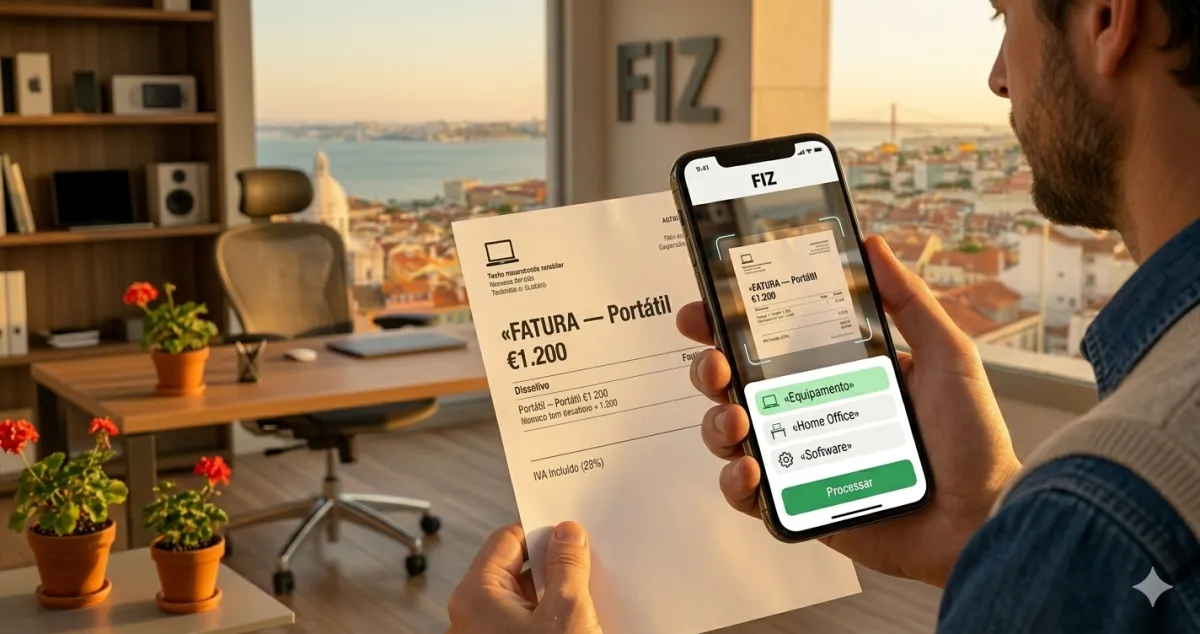
Rita, a designer in Lisbon, almost fell off her chair when she found out. For two years, she’d been paying VAT on everything - new MacBook, Adobe licence, coworking space - without knowing she could deduct that amount. Result? She left over €3,000 on the table.
If you issue invoices with VAT (turnover above €15,000/year), I have good news: the VAT you pay on your professional expenses reduces what you have to hand over to the government. This is called deductible VAT.
How Deductible VAT Works in Practice
Imagine you’re like João, a marketing consultant in Porto. In a typical quarter:
That’s money that stays in your pocket, every quarter.
The Secret Is in the NIF on the Invoice
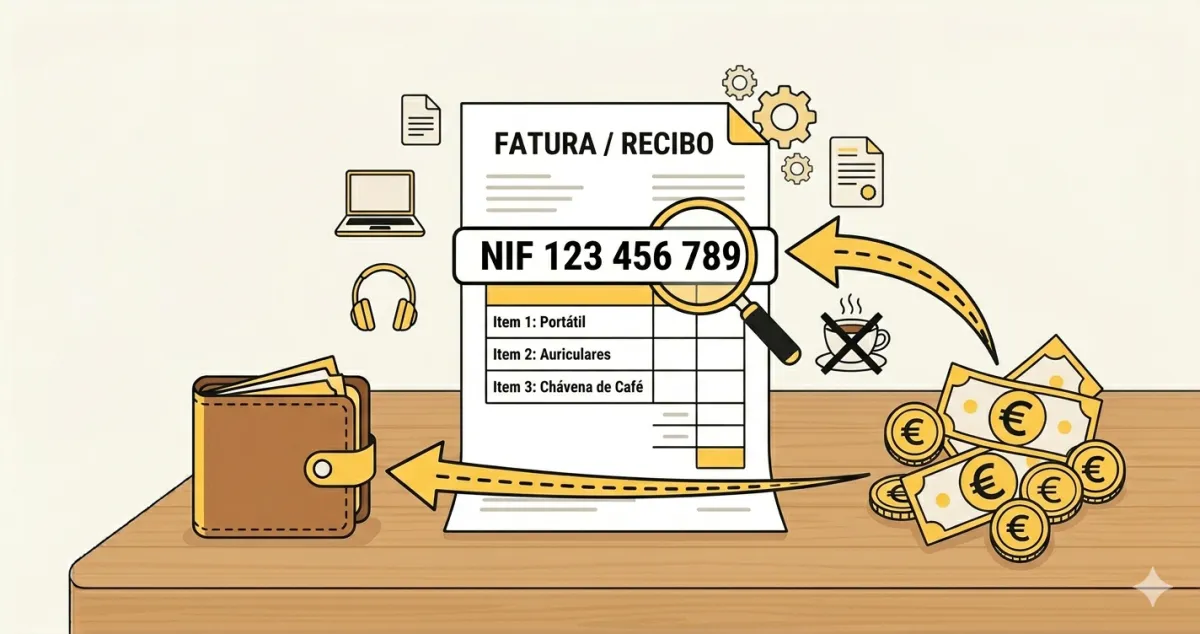
Here’s the trick many independent workers don’t know: the invoice must have your NIF (tax number).
When you go to buy a laptop or pay your coworking membership, always ask for an invoice with your tax number. Without the NIF, you can’t deduct.
Ana, a copywriter in Coimbra, learned this the hard way. She bought a €1,200 computer but asked for an invoice without her NIF. She lost €225 in VAT deductions. “It was an expensive lesson,” she says.
What Expenses Can You Deduct?
Expenses must be related to your activity:
⚠️ Warning: The coffee and pastry on your break? Not deductible. Expenses must have a clear connection to your work.
How to Make the Deduction on the Quarterly VAT Declaration
The process happens when you submit the quarterly VAT declaration:
- Log in to the Finance Portal with your credentials
- Go to “Submit Declaration” > “VAT” > “Periodic Declaration”
- In the deductions section, enter the total VAT from your expenses
- The system automatically calculates how much you owe
Pedro, an IT consultant, does this every quarter: “At first it seemed complicated, but now it takes me 15 minutes. It’s worth it for the money I save.”
The Most Common Mistake (and How to Avoid It)
The most frequent error? Mixing personal and professional expenses without criteria.
Marta, a translator, bought an iPhone and tried to deduct 100% of the VAT. Problem: she uses the phone 50% for work, 50% personally. In an audit, this can cause problems.
The golden rule: be reasonable. If you use something partially for work, only deduct that percentage.
What If You Don’t Yet Invoice with VAT?
If you invoice less than €15,000/year, you’re exempt from VAT (Article 53 of CIVA). This means:
- You don’t charge VAT to your clients
- You can’t deduct VAT on your expenses
It cuts both ways. That’s why many freelancers prefer to go above the threshold - the deductions make it worth it. And you don’t have to wait to reach it: you can do it on purpose - see waiving the art. 53.º exemption.
How Much Can You Really Save?
Bruno, a photographer in Porto, did the maths from last year:
“It’s like getting a 23% discount on all professional purchases,” he explains.
Get Organised From the Start
Build a simple habit: whenever you receive a professional invoice, save it immediately in a folder (physical or digital). When quarterly VAT declaration time comes around, you have everything to hand to fill in your deductions.
✅ In summary - 3 points
-
If you charge VAT on your invoices, you can deduct VAT on professional expenses - it’s money that stays in your pocket instead of going to the government
-
The invoice must always have your NIF - without this, you lose the right to deduct
-
Organisation is everything - keep all professional invoices, record deductions on the quarterly VAT declaration, and be reasonable with the percentage you deduct for mixed-use expenses. FIZ (Auto Pro plan) automates this process and submits the declaration each quarter.