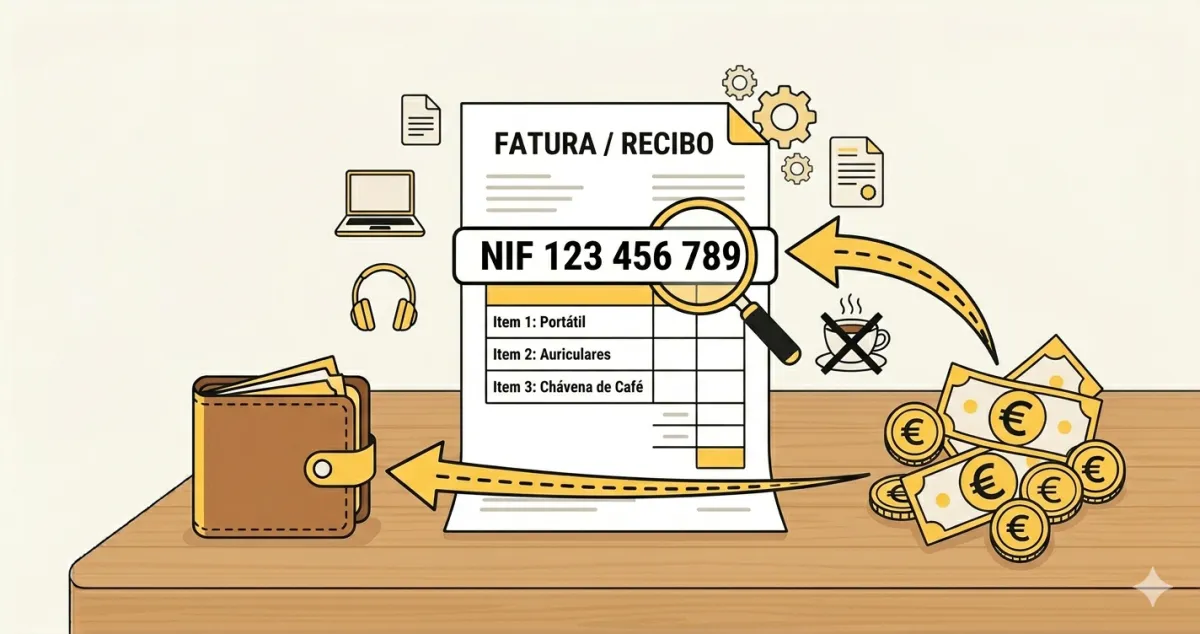

When I opened my activity as a freelancer, I did what everyone told me to do: I hired an accountant straight away.
“It’s safer.” “You won’t get into trouble.” “You don’t understand any of this.”
I paid €150 a month for eleven months. I did the maths recently: €1,650.
After a year, I realised my accountant was essentially doing three things for me:
- Forwarding emails from the Portal das Finanças
- Reminding me of quarterly declaration deadlines
- Filling in forms I could have filled in myself
I’m not saying they were incompetent. They were doing exactly what I’d asked them to do. The problem was me — I hadn’t understood that, under the simplified regime, most of the accounting work had been deliberately eliminated by the state.
What the simplified regime actually simplifies
The simplified regime exists precisely so that independent workers invoicing under €200,000 per year don’t need organised accountancy (the kind companies do). Below that threshold, the law doesn’t even require you to have an accountant — it’s a choice, not a requirement.
Under the simplified regime:
- No balance sheets, no profit and loss statements
- Taxable income is calculated automatically: most services apply a coefficient of 0.75 to the invoiced amount
- Obligations are quarterly (VAT and SS) and annual (IRS) — standardised forms
It was designed to be simple. And it is simple.
What I needed wasn’t an accountant. It was a list of dates and decent certified invoicing software.
What my accountant was doing — and what I was paying for
I went back through eleven months of emails. The real work was:
| Task | Frequency | Estimated time |
|---|---|---|
| Quarterly VAT return | 4× per year | 15 min each |
| Quarterly SS return | 4× per year | 10 min each |
| Annual IRS declaration | 1× per year | 45 min |
| Answering queries | Occasional | — |
Total real technical work: under 3 hours per year.
I was paying €1,650 per year for 3 hours of work — mostly filling in standardised forms.
When an accountant actually makes sense
This isn’t a criticism of the profession. There are situations where an accountant is essential:
- Invoicing above €200,000 — moves to mandatory organised accountancy
- Mixed activities (services + products) with different coefficients
- Complex tax situations — property, inheritance, overseas income
- Companies (Lda., SA) — outside the scope of the independent worker simplified regime
- If you genuinely don’t have time — €150/month can be a valid investment for some
But if you’re a normal freelancer on the simplified regime invoicing between €10,000 and €150,000 per year? You probably don’t need one.
What I changed
I cancelled the contract with my accountant. I signed up for AT-certified invoicing software. I spent two hours understanding the dates and forms.
The difference in the first quarter:
- VAT return: 18 minutes (done myself, for the first time)
- SS return: 12 minutes
- How it felt: genuine surprise at how straightforward it was
Money saved the following year: €1,650. Which I reinvested in the business.
Important: There’s a key difference between “not needing an accountant” and “not needing to understand your tax situation”. Even without an accountant, you need to know the deadlines, the amounts, and the basic rules. Ignorance doesn’t protect you from fines.
The lesson I wish I’d had earlier
The simplified regime was designed to be accessible to anyone. It doesn’t require accounting training. It requires organisation and the right tools.
I hired the accountant out of fear of the unknown — not because the situation was complex. If I’d spent 3 hours understanding how the system works, I’d have saved nearly €2,000 in the first year.
I don’t regret learning. I regret how long it took me to start.
✅ In summary
-
The simplified regime was designed to be managed without an accountant. If your invoicing is below €200,000 and you only have independent work income, the obligations are simple and standardised.
-
Evaluate what you’re actually paying for. €150/month = €1,800/year. If your accountant is essentially reminding you of deadlines and filling in forms, consider whether that makes sense.
-
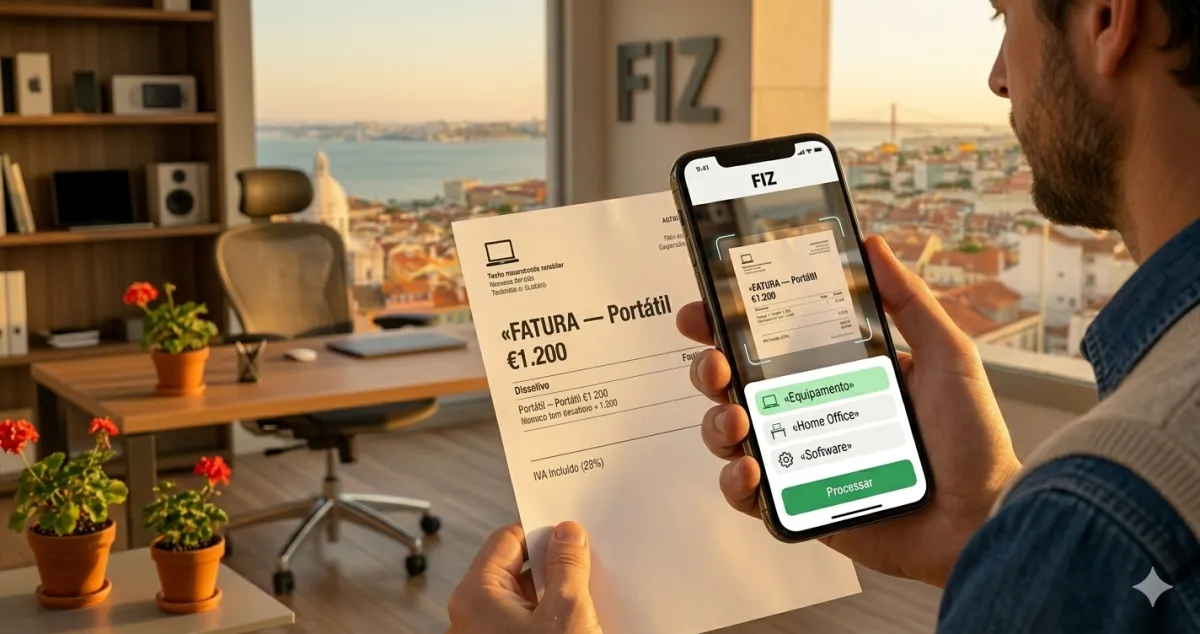
With FIZ quarterly VAT and SS returns are submitted automatically — no accountant, no surprises, Fiscal Shield included.