Imagine receiving a notification from the AT for a tax inspection covering the last 4 years. Your heart races. Do you know where your 2022 invoices are?
This happens. But with a simple filing system, there is no reason to panic.
The 4-year rule
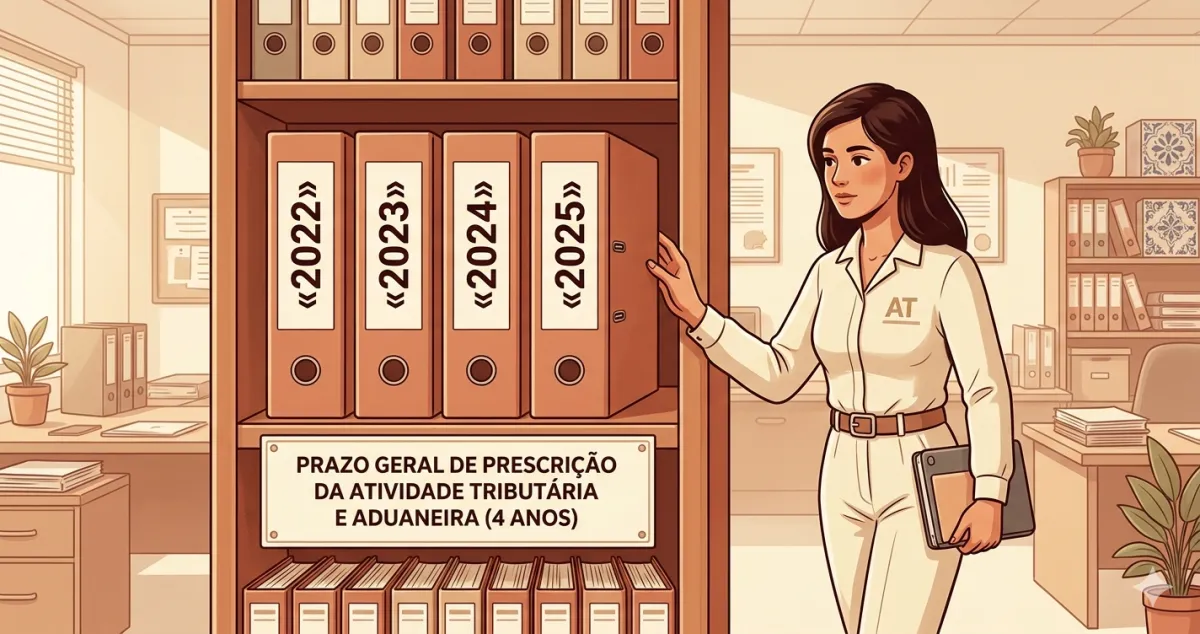
You must keep all tax documents for 4 years after the year they relate to.
Practical examples:
- Invoice from March 2025 → keep until December 2029
- 2024 IRS declaration → keep until December 2028
- Service contract from 2023 → keep until December 2027
Exception: documents related to property or special asset situations may require 12 years. When in doubt, keep longer.
What counts as a tax document
Many people only keep the invoices they issue. But the AT can ask for much more:
What you should keep:
- Receipts and invoices you issued (your income)
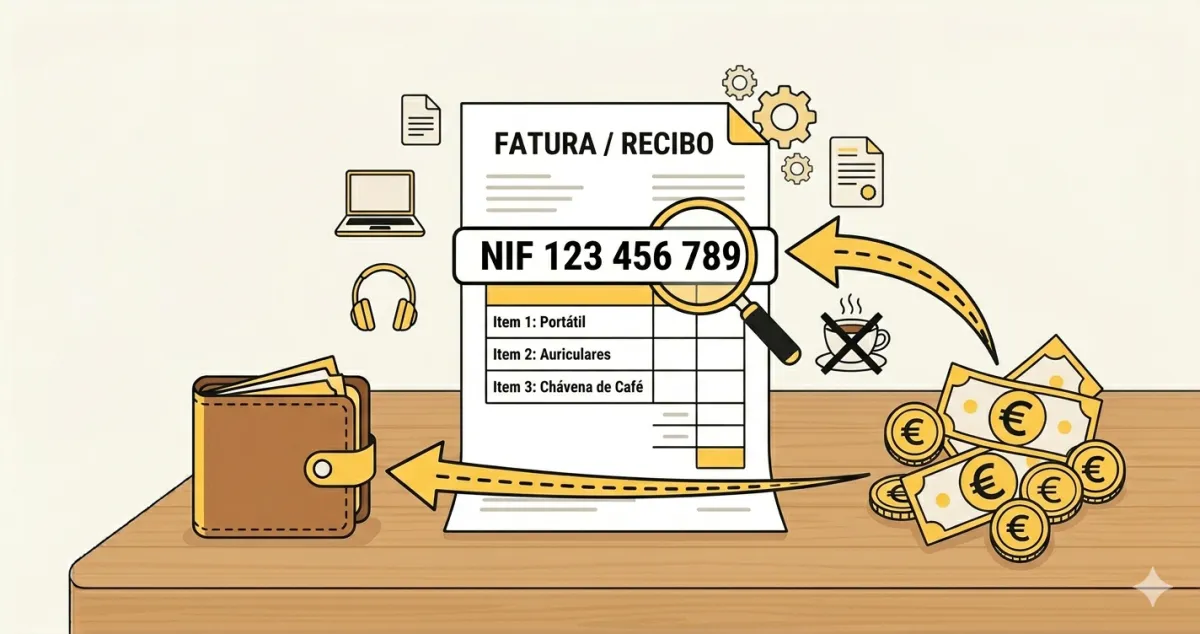
- Professional expense invoices (equipment, software, office space, training)
- Client contracts (written or digital)
- Bank statements
- Tax payment confirmations (IRS, VAT, SS)
- Filed tax declarations and their confirmation receipts
- Relevant correspondence with the tax authority or Social Security
Is a digital copy enough?
Yes. In Portugal, digital copies have the same legal validity as physical originals, provided they are legible and complete.
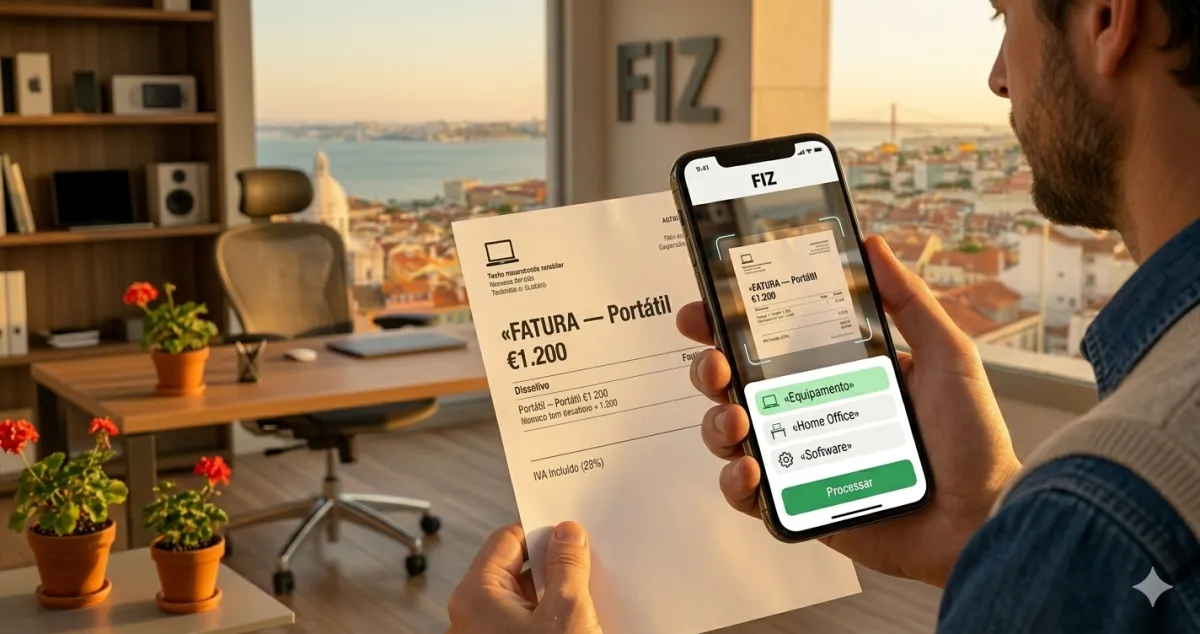
You do not need to keep paper. A PDF of a pharmacy receipt photographed with your phone is sufficient for tax purposes.
Good digital filing practices:
- Folder by year → subfolder by category (income, expenses, declarations)
- Descriptive names:
2025-03-invoice-client-x-500eur.pdf - Backup in two locations: cloud (Google Drive, Dropbox) + external drive
What happens if you do not have the documents
During an audit, the AT can request proof of any expense or income declared. Without it:
- Unproven expenses: not accepted as a deduction — you pay more IRS
- Undocumented income: the AT may presume figures higher than declared
- Missing declarations: fines between €150 and €3,750 per missing declaration
The invoices you issue are already stored
Good news: invoices issued through certified software are automatically saved in the AT’s e-fatura system. Even if you lose your PC, the record exists on the Finance Portal.
The same applies to declarations you filed — they stay in the Portal history.
What you genuinely need to manage carefully are expense invoices — the ones you receive from your suppliers and use to justify professional costs or personal deductions.
✅ In summary
-
Keep everything for 4 years after the year it relates to — digital copies have full legal validity. Folder by year, backup in two locations.
-
It is not just the invoices you issue — contracts, bank statements, expense invoices, and tax payment confirmations are all part of your tax archive.
-
With FIZ the invoices you issue are automatically archived in the cloud — the record exists in the system and is available when you need it, without depending on paper or local files.