At 7:30 am, Ana is in Porto having her first coffee. She picks up her phone.
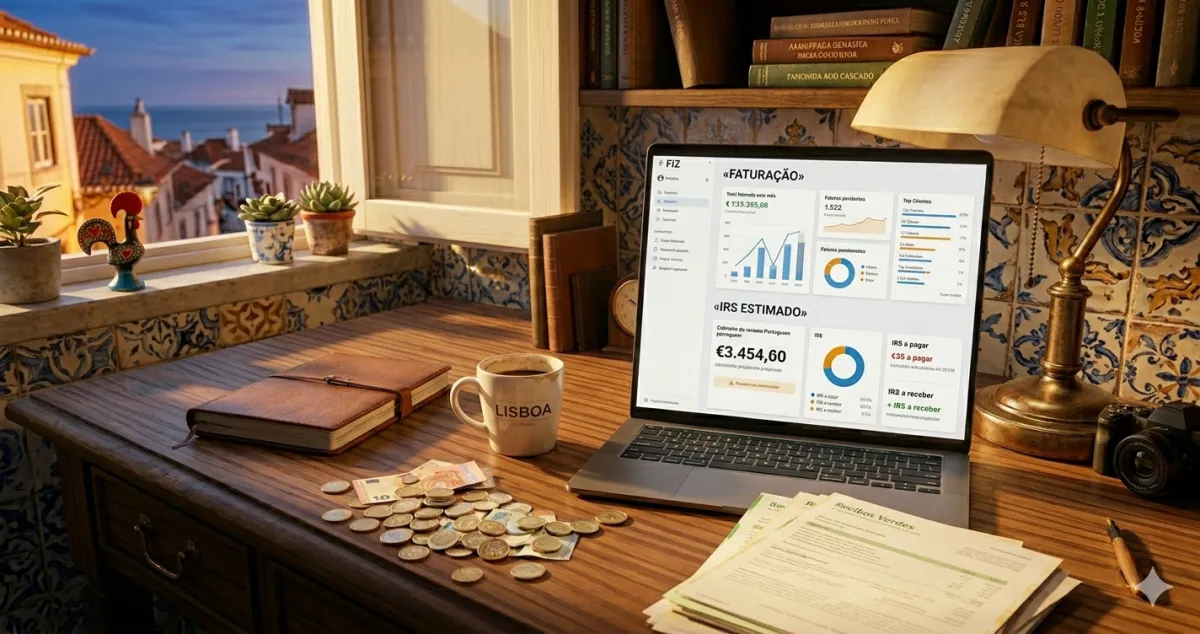
Not Instagram. Not email. She opens her tax platform dashboard.
Thirty seconds later, she knows everything she needs: how much she’s invoiced this month, when the next VAT return is due, whether her Social Security is up to date.
She puts the phone down. Finishes the coffee. Gets to work.
Two years ago, Ana woke up differently. Sunday afternoons were for organising invoices in Excel. Monday mornings were for hunting down receipts. April was the month she didn’t sleep well, anxious about the annual IRS declaration.
Today, accounting takes exactly 12 minutes a day. Literally.
10:00 — Invoice in 2 minutes
New client in Porto wants an invoice for a website redesign project. €800.
Ana opens the app. Enters the client’s NIF, describes the service, sets VAT to 0% (she’s exempt under Article 53 of the CIVA because she invoices less than €15,000 per year). Clicks issue.
The PDF comes out AT-certified with ATCUD code and QR code. She sends it via WhatsApp.
2 minutes.
Ana can still remember having to log into the Portal das Finanças, authenticate with her Mobile Key, navigate five menus, fill in twenty fields, and wait for the PDF to load.
She doesn’t remember exactly how long it used to take. Because she stopped doing it that way.
11:30 — An expense logged in 1 minute
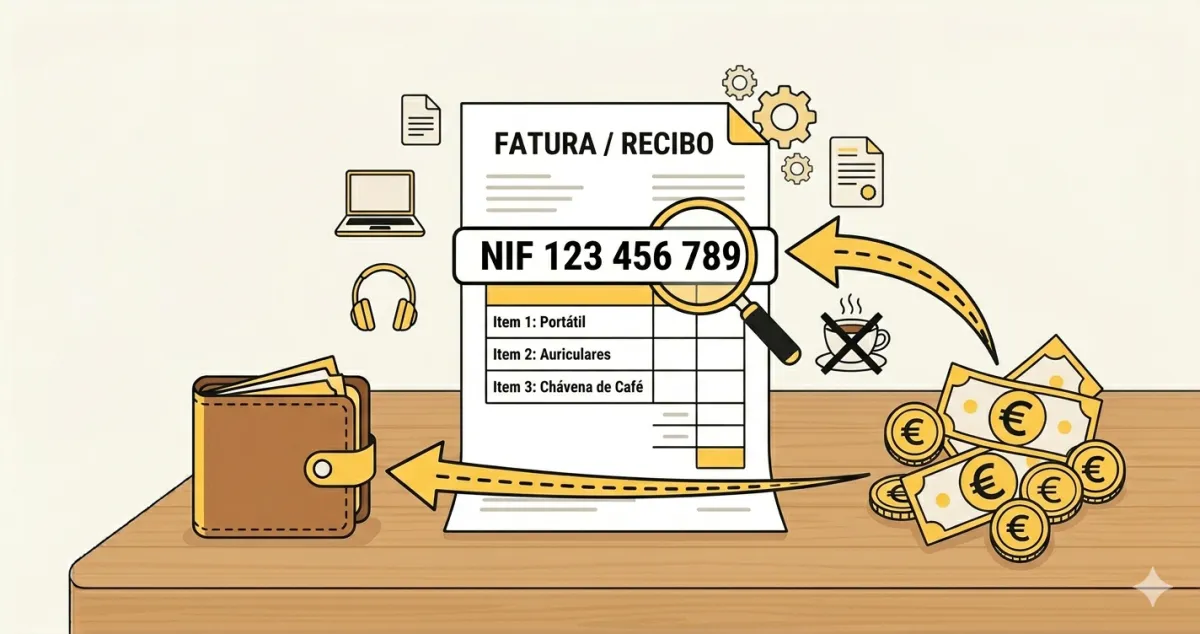
She bought an external hard drive. €89. A deductible professional expense for the annual IRS return.
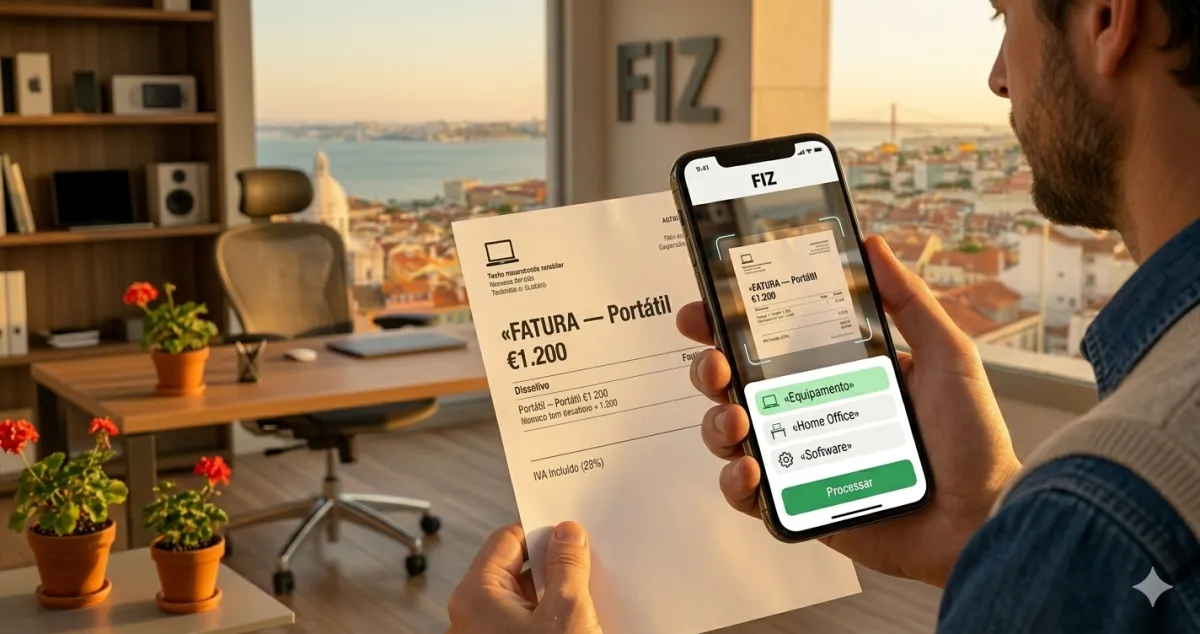
She takes a photo of the receipt on her phone. The system reads it automatically: supplier, amount, VAT. She selects the category “Computing equipment”. Done.
1 minute.
At year end, when it’s time to do the IRS, all expenses are organised by category. No folders. No envelopes. No “where did I put that bit of paper”.
14:00 — The payment she didn’t have to confirm
Notification: payment received, €800. The system detected the bank transfer and automatically matched it to the correct invoice.
Ana didn’t do anything.
Before her current setup, bank reconciliation was an afternoon lost: bank statement in one window, invoice list in another, manually matching every transfer. Now it’s automatic.
16:00 — The conversation at the café
Her friend Mariana, also a freelancer, arrives looking like she hasn’t slept.
“I think I forgot the quarterly VAT return. And I don’t know if I’ve paid Social Security. My accountant is on holiday.”
Ana shows her the phone: “My quarterly return was submitted automatically on the 20th. Social Security too. I didn’t do anything — the system handled it.”
“But don’t you need to check it?”
“I get a confirmation email when it’s submitted. Look, it’s here.”
Mariana stares at the screen without saying anything.
18:00 — The notification that doesn’t frighten her
Push notification: “Next quarterly VAT return in 15 days.”
Ana sees it. Feels nothing in particular. Maybe a mild sense of relief.
Two years ago, this kind of alert would have sent her into a panic. Today it’s just information.
Note: The simplified regime does not mean the state automatically handles your declarations. The calculation of taxable income is simplified (coefficient of 0.75 for services), but quarterly VAT and Social Security returns remain your responsibility. You need to submit them — you or the tool you use.
20:00 — End of day
| Task | Time |
|---|---|
| Morning dashboard check | 30 seconds |
| Issue invoice | 2 minutes |
| Log expense | 1 minute |
| Confirm payment received | 0 minutes |
| Check VAT notification | 10 seconds |
| Total | ~4 minutes |
Before her current setup: at least 2 hours a day, sometimes more in declaration months.
What changed wasn’t Ana. She’s the same person with the same relationship to numbers she’s always had. What changed was the infrastructure.
What Ana learnt
Accounting didn’t get easier because she learnt accounting. It got easier because she stopped doing it manually.
The difference between a freelancer who fears the admin and one who doesn’t isn’t tax knowledge. It’s the tool they chose.
✅ In summary
-
Scary accounting isn’t accounting — it’s the manual version of it. Invoices in Excel, constantly logged into the Portal das Finanças, manual bank reconciliation. That’s what eats time and creates anxiety.
-
12 minutes a day is real. That’s what’s left when quarterly returns are automatic, invoices take 2 minutes, and expenses are logged with a photo.
-
With FIZ quarterly VAT and Social Security returns are submitted automatically — and the Fiscal Shield covers fines up to €500 if anything goes wrong.