You’ve bought the car and recovered (or not) the VAT on the purchase - that’s the first calculation. Now come the running costs. And there’s a wrong idea to clear up right away: having the right to the VAT on the purchase does not drag along the VAT on running it. Each has its own rule.
What you recover on running costs
For an ordinary passenger car:
Notice: buying an electric car does not extend its benefit to servicing or tolls. Those stay at 0% on a passenger car.
Fuel: it’s what you buy, not the engine
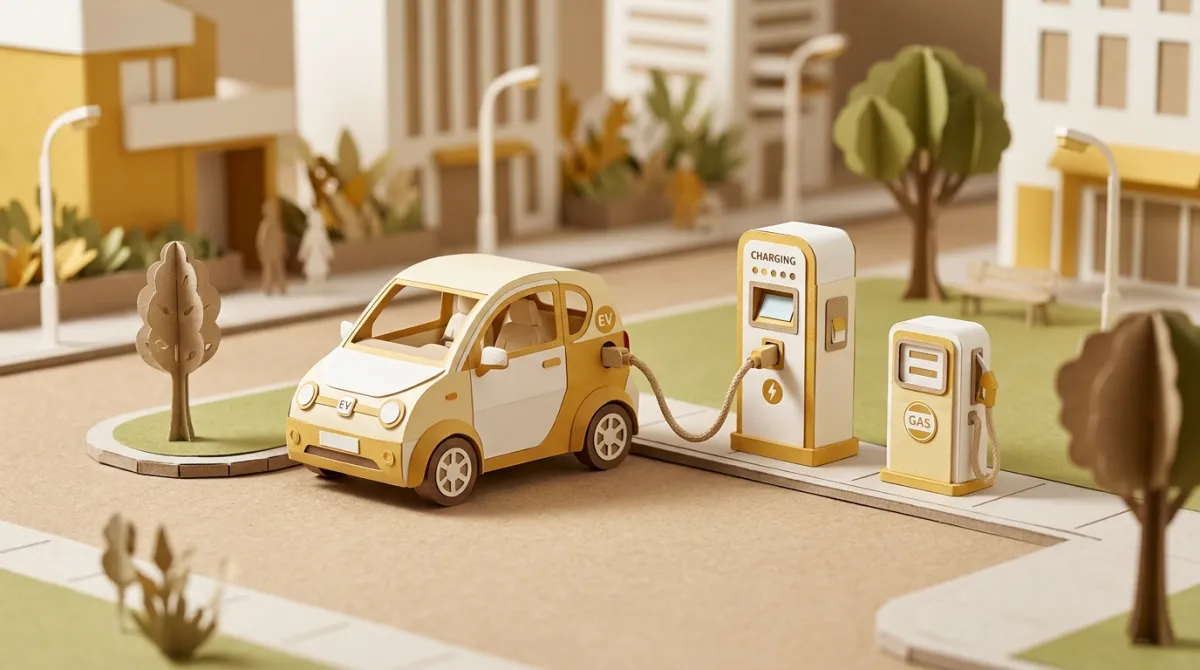
The rate follows the fuel you put in, not the type of car. The trickiest case is the plug-in hybrid: buying a PHEV within the limit does not make petrol deductible - petrol stays at 0%, while diesel is 50%. Fuel invoices have to distinguish the product (the AT’s position in PIV 26845).
Two details worth money:
- If your BEV went over the price limit on the purchase and you lost the purchase deduction, that does not remove your right to the electricity - charging has its own basis, with no price condition.
- On an LPG bi-fuel, it’s the purchase benefit (the 50% of point g) that holds despite the mixed engine - the petrol you put in stays at 0%.
Charging the electric car: where the AT has already put the brakes on
This is the part that causes the most headaches, because it looks obvious (“it’s electricity, deductible”) and it isn’t that simple.
In public. Check the invoice is in your name, with VAT, and linked to the car and the activity. If the document bundles electricity + parking + subscription + idle fee, you cannot apply a single percentage to everything - each line has its own nature, and the single classification of an “all-in” service is a grey area.
At home. Here’s the most important “no”: the AT (PIV 26763) refused the deduction when the charging cost is inside the household electricity bill and isn’t identified. In other words, a wallbox reading or an internal kWh table is not enough. For there to be any chance, you need to be able to show:
- who holds the electricity contract (name and NIF);
- how the car’s consumption is separated from the home’s;
- whether the car, the period and the kWh are identified;
- how personal consumption is excluded.
The wallbox. The electricity and the equipment to supply it are different purchases. In PIV 24830, the AT refused the deduction of buying and installing chargers as a running cost of the car. So dropping the wallbox automatically into “equipment, VAT 100%” is premature - it has to be checked case by case.
Warning: working from home does not confirm either deductible home charging or the documentation the AT requires. It’s the identified invoice that decides, not where your desk is.
Insurance, IUC and the rest
- Insurance is, as a rule, VAT-exempt - and the Stamp Duty (Imposto do Selo) on the policy is not VAT. Don’t confuse “no VAT to deduct” with “I deduct what’s shown”.
- IUC has no VAT; a 100% electric car is IUC-exempt (art. 5 of the IUC Code). There are changes due to take effect from 2027 - don’t apply them to 2026 ahead of time.
- ISV, border tolls, fines and fees are handled separately. They don’t belong in the “all the car’s costs” package just because the car is electric.
Where FIZ comes in
FIZ applies to each cost the percentage the law allows - 50% to diesel, 0% to petrol, electricity’s own rule - and doesn’t promise home-charging deductions the AT won’t accept without an identified document.
In summary
- Purchase and running are different calculations: the right to the VAT on the purchase does not drag along servicing or tolls (0% on a passenger car).
- Fuel by the pump: diesel/LPG/gas 50%, petrol 0% (even in a PHEV), electricity with its own rule.
- Charging at home and the wallbox: the AT has already refused deductions without an identified cost (PIV 26763) and the equipment as a running cost (PIV 24830). Document it before counting on it.
Next piece: personal and business use.